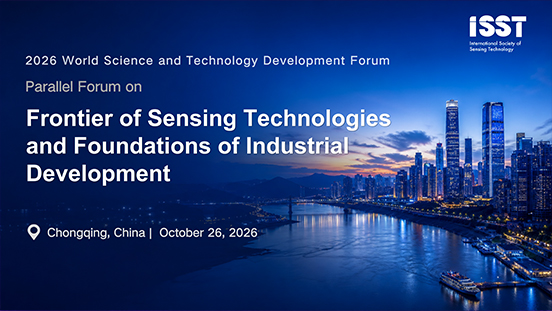
Held alongside the 2026 World Science and Technology Development Forum, this parallel forum brings together leading scholars, device developers, and system integrators from across the global sensing community.
Over the course of the forum, participants will explore disruptive technologies including quantum sensing, biomimetic perception, multimodal fusion, and brain–computer interfaces. Through in-depth discussions on high-precision, low-power intelligent sensing, the forum will examine pathways to overcome industrial bottlenecks, anticipate future technology roadmaps, and advance ethical and global governance frameworks.
The forum aims to build a global collaboration network connecting foundational sensing, information processing, and industrial applications—laying the groundwork for the reliable and secure development of future industries.
International Society of Sensing Technology (ISST)
Chongqing Brain Science Application Association
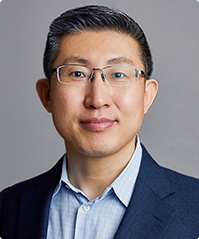
Foreign Member of the Chinese Academy of Engineering
Foreign Member of the National Academy of Engineering of the United States
Fellow of the Royal Society of Canada, the Canadian Academy of Engineering, and the Canadian Academy of Health Sciences
Microsystems for Characterizing and Manipulating in vitro Cardiac Models
Heart disease remains the leading global cause of death. Heart-on-a-chip platforms are emerging approaches to establishing cardiac cell/tissue models in vitro for studying cardiac physiologies, disease modeling, cardiotoxicity testing, and therapeutic discoveries. This presentation will introduce microengineered platforms and biosensing technologies for functional assessment of in vitro cardiac models. Example heart-on-chip devices that integrate flexible bioelectronics with engineered human cardiac tissues will be discussed. Applications and discoveries enabled by these platforms including the investigation of fundamental cardiac physiology (e.g., iPSC-CM maturation under mechanical and electrical stimulations), high-throughput drug testing (e.g., isoproterenol, verapamil, blebbistatin, E4031), and disease modeling for therapeutic discovery (e.g., myocardial infarction, drug-induced cardiac arrhythmia, and arrhythmogenic right ventricular cardiomyopathy, ARVC) will also be introduced.
Yu Sun is a Professor at the University of Toronto. He is a Tier I Canada Research Chair, was the founding director of the UofT Robotics Institute, and served as the University Nanofabrication Center' s faculty director. His lab specializes in developing innovative technologies and instruments for manipulating and characterizing cells, molecules, and nanomaterials. He is a Fellow of Canadian Academy of Engineering, a Fellow of The Academy of Science of Royal Society of Canada, a Fellow of Canadian Academy of Health Sciences, an International Member of the Chinese Academy of Engineering, and an International Member of the U.S. National Academy of Engineering. He was elected Fellow of IEEE, ASME, AIMBE, AAAS, NAI, CSME, and EIC for his work on micro-nano robotic systems and devices. Among the awards he received were an NSERC E.W.R. Steacie Fellowship, NSERC Synergy Award of Innovation, IEEE McNaughton Gold Medal, IEEE EMBS Technical Achievement Award, and IEEE NTC Pioneer Award in Nanotechnology. He is the Editor-in-Chief of IEEE Trans. Automation Science and Engineering and an advisory board member of the AAAS journal, Science Robotics.
More Information Coming Soon……


