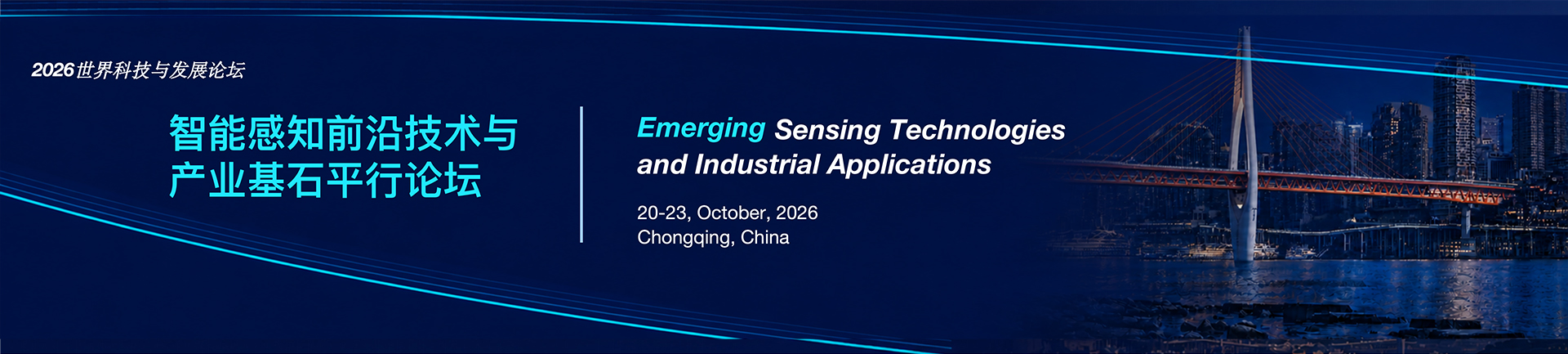

Held alongside the 2026 World Science and Technology Development Forum, this parallel forum brings together leading scholars, device developers, and system integrators from across the global sensing community.
Over the course of the forum, participants will explore disruptive technologies including quantum sensing, biomimetic perception, multimodal fusion, and brain–computer interfaces. Through in-depth discussions on high-precision, low-power intelligent sensing, the forum will examine pathways to overcome industrial bottlenecks, anticipate future technology roadmaps, and advance ethical and global governance frameworks.
The forum aims to build a global collaboration network connecting foundational sensing, information processing, and industrial applications—laying the groundwork for the reliable and secure development of future industries.
International Society of Sensing Technology (ISST)

Chongqing Brain Science Application Association
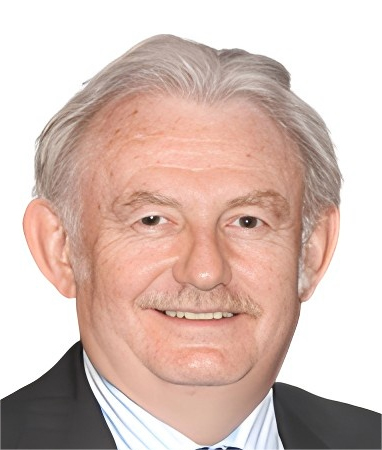
OBE FREng Royal Academy of Engineering
George Daniels Professor of Scientific Instrumentation, City St George's, University of London
Fibre Optic Sensors – new solutions for Emerging Sensing Technologies and tomorrow’s Industrial Applications?
Fibre Optic Sensors (FOS) continue to transition from laboratory innovations to cornerstone tools in ‘smart’ industrial monitoring. As modern industry demands smarter, more resilient, and highly scalable tracking systems, FOS technologies offer unmatched operational advantages. This talk will explore how recent breakthroughs in these emerging sensing technologies – including in-Fibre Bragg Gratings (FBGs) and the integration of Artificial Intelligence (AI) and advanced signal processing – are redefining the way in which industry can be supported through the design, use and implementation of better fibre optic sensors. It is encouraging that Fibre Optic Sensors (FOS) continue to transition from laboratory innovations to cornerstone tools in key areas of industry such as smart structural health monitoring and as aging infrastructure needs to have a longer use, such sensor systems can, for example, replace inspection-based maintenance with continuous, data-driven strategies.
Unlike traditional electronic alternatives, FOS platforms provide immunity to electromagnetic interference (EMI), explosive-safe passive operation, and long-range remote sensing capabilities within highly aggressive chemical and thermal environments. As we examine today’s – and tomorrow’s – industrial applications, highlighting deployments, for example in structural health monitoring for aerospace and marine architectures, real-time current collection in smart rail systems, and continuous asset monitoring across energy pipelines, lessons for wider deployment can be learned. The talk will address key bottlenecks facing widespread commercial scalability, including specialized calibration costs, ruggedized packaging standards, and ‘big data’ handling issues.
The overall aim is to help develop valuable insight into how optical fibre sensor networks are evolving for next-generation smart manufacturing and industrial automation.
Kenenth Grattan graduated in physics from Queen's University Belfast in 1974, followed by a PhD in laser physics. He joined City St George's, University of Londo in 1983 and was appointed George Daniels Professor of Scientific Instrumentation in 2013 and to a Royal Academy of Engineering Research Chair in 2014. His research interests include the development and use of fibre optic and optical systems in the measurement of a range of physical and chemical parameters. He was elected President of the International Measurement Confederation (IMEKO) in 2014, serving from 2015 to 2018. He was also elected to the Royal Academy of Engineering, the UK National Academy of Engineering, in 2008. He was awarded the Officer of the Order of the British Empire (OBE) by Her Majesty the Queen at Windsor Castle in November 2018.
He is internationally acknowledged for his influential research contributions over more than four decades to the creation and use of innovative photonic and optical fibre measurement, sensor and instrumentation techniques, on both the microscopic and macroscopic levels, creating impact through their exploitation with industry and end-users in the UK and abroad. An underpinning theme has been the translation of excellence in optical system design from scientific and engineering concepts to industrial reality.
Professor Grattan had been Deputy Editor of the Journal Measurement Science and Technology for several years and currently serves on the Editorial Board of several major journals in his field in the USA and Europe. From 2001 to 2017, he was Editor of the IMEKO Journal Measurement and also serves on their General Council. He has been appointed Editor-in-Chief of the journal Measurement: Sensors in 2019 and is now Editor Emeritus. Professor Grattan is the author and co-author of over nine hundred refereed publications in major international journals and a similar number at conferences and is the co-editor (with Professor B T Meggitt) of a five-volume topical series on optical fiber sensor technology. His work is highly cited by his peers nationally and internationally.
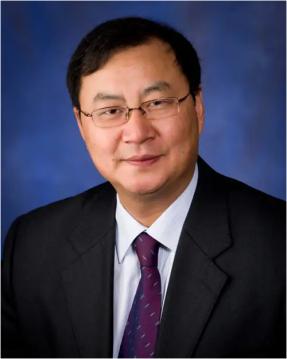
Fellow of the Canadian Academy of Engineering
Fellow of the Royal Society of Canada
Fellow of the Canadian Academy of Engineering
Fellow of the German National Academy of Science and Engineering (acatech)
Fellow of the IEEE
President of the Institute for Wireless Intelligence
Council Member of the International Society of Sensing Technology (ISST)
Wireless Intelligence and Physical AI
Professor Wu currently serves as President of the Institute of Wireless Intelligence, and is an Industrial Research Chair Professor in Future Wireless Technologies at the Polytechnique Montréal (University of Montreal), as well as Director of the Poly-Grames Research Center. He served as the 2015–2016 President of the IEEE Microwave Theory and Technology Society (MTT-S), becoming the first president of Chinese mainland background in the history of IEEE MTT-S.
Professor Wu enjoys a world-renowned reputation in the fields of microwaves, millimeter waves, terahertz, and integrated sensing and communication (ISAC). He pioneered the concept of Substrate Integrated Circuits (SIC) and has published more than 1,500 articles and holds 95 patents. He has supervised over 185 PhD and Master's students. He has long been dedicated to promoting the industrial translation and global collaboration of wireless communication and intelligent sensing technologies.
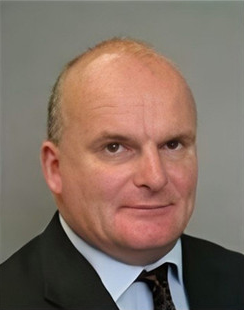
Professor and Director of Optical Fibre Sensors Research Centre of University of Limerick (Ireland)
Etch-Free Fiber Fabry–Perot Refractive Index Sensor
A fiber-optic Fabry–Perot interferometric refractive index sensor fabricated without chemical etching is presented. The sensor consists of a single-mode fiber inside a silica capillary, and a multimode fiber mounted at the tip of the sensor. It was fabricated using only fusion splicing and dry polishing, eliminating the need for hydrofluoric acid-based processing. The sensing performance was experimentally evaluated using NaCl solutions with refractive indices ranging from 1.3332 to 1.3598 RIU. Reflection spectra were acquired using a Hyperion optical interrogator, and the wavelength shift of a selected Fabry–Perot resonance dip was monitored. The sensor exhibited a stable monotonic wavelength response over the investigated range, achieving a sensitivity of 125.67 nm/RIU with a coefficient of determination (R²) of 0.9967 and a residual standard deviation of 0.0725 nm. The experimental results demonstrate reliable refractive index sensing can be achieved using a simple, repeatable and low-cost fabrication approach. The sensor of this investigation is highly suitable for applications including biomedical, chemical, and environmental.
Elfed Lewis graduated with BEng (Hons) in Electrical and Electronic Engineering from Liverpool University in 1978 and was awarded his PhD from the same institution in 1987. He is Associate Professor and Director of the Optical Fibre Sensors Research Centre at University of Limerick, which he founded in 1996. He is Fellow of Institute of Physics, IET and Senior member IEEE. He has authored and co-authored more than 180 journal papers and made in excess of 300 contributions to international conferences. He currently holds 9 patents on Optical Fibre Sensor Devices. In 2005 he was recipient of the University of Limerick Special Achievement in Research Award and was a Fulbright Scholar with CREOL (University of Central Florida) in 2008. He was Distinguished Lecturer for IEEE Sensors Council for the period July 2013-June 2015 and General Co-Chair of the recent IEEE 2019 World Forum on IoT held at University of Limerick, Ireland.
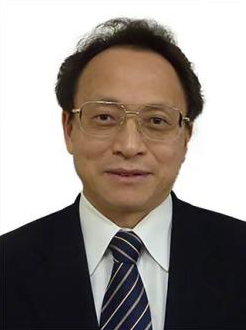
Member of Engineering Academy of Japan
Fellow of Japan Federation of Engineering Society
Honorary Vice Chairman of Chinese Association for Artificial Intelligence
Chief Scientist of Artificial Intelligence at University of Electronic Science and Technology of China
Chair Professor of University of Electronic Science and Technology of China
From Computational Perception to Empathetic Interaction
Emotional intelligence in AI is evolving from unimodal emotion recognition into an interdisciplinary field integrating neuroscience, human–computer interaction, education, ethics, and health and well-being. Its purpose is not merely to make AI more humanlike, but to make it more respectful of people. This keynote will define emotional intelligence in AI and review recent advances at its intersections with cognitive neuroscience, empathetic dialogue systems, adaptive education, affective ethics and algorithmic fairness, embodied affect and robotic emotional expression, and mental health. Using the development of emotionally intelligent robots for a society in which humans, robots, and digital humans coexist and interact—a metaphorical “three-way dance”—as an illustrative case, it will examine three central debates: Does emotion recognition amount to empathy? Can artificial emotional systems have subjective feelings? How do cultural differences challenge universal models of emotion? Building on these discussions, the keynote will propose a fourth-generation paradigm for emotional intelligence in AI, grounded in explainability, contextual sensitivity, cultural adaptability, and ethical alignment, to shape future intelligent systems that are trustworthy, empathetic, and controllable.
CAAI Fellow, IEICE Fellow, and AAIA Fellow. Honorary Professor at the University of Tokushima, Japan. The First Prize of Innovation Award in Wu Wenjun Artificial Intelligence Science and Technology Prize. Outstanding Contribution Award of the Annual Scientific Chinese Person of the Yea, Recipient of the China Industry-Academia-Research Cooperation Innovation Award. Recipient of the National Science Fund for Distinguished Young Scholars (Overseas),National Distinguished Expert, Chinese Government Friendship Award. Overseas Intellectuals Expert of China Association for Science and Technology,Overseas Expert Consultation Committee of State Council's Overseas Chinese Affairs Office. Founder of IEEE International Conference on Natural Language Processing and Knowledge Engineering.
In November 2021, a Nature sub-journal reported that from 2016 to 2020, it ranked among the top three globally in the field of sentiment analysis. Additionally, the “Sentiment Analysis White Paper”, published in December 2022, recognized it as the leading scholar in the field of sentiment analysis worldwide.
More Information Coming Soon……


)


